It has been over a week since we blogged. But we've been on the move so following are some highlights. This will be a long entry so, hopefully, you have your coffee or adult beverage in hand!!
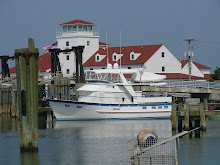
We left Marathon in the Florida Keys where  we had been for a little over 3 weeks. We enjoyed our stay there but were anxious to get going and when the winds finally died down we hightailed it out of there with Vicki and Norm (Tidehiker). Here is Rickshaw going under the 7 mile bridge which connects the middle keys, where we were in Marathon, to the lower keys. We are heading north toward the SW Florida Everglades.
 we had been for a little over 3 weeks. We enjoyed our stay there but were anxious to get going and when the winds finally died down we hightailed it out of there with Vicki and Norm (Tidehiker). Here is Rickshaw going under the 7 mile bridge which connects the middle keys, where we were in Marathon, to the lower keys. We are heading north toward the SW Florida Everglades.
We made our way offshore southern Florida on the Florida Bay. It was a beautiful day with low winds and calm seas. We were out of sight of land for much of the time because the Florida Bay is so large. Our destination was the Little Shark River, just west of Flamingo, where Bob and Stephanie (September Song) were anchored. This is part of the Everglades National Park. It was a beautiful but remote anchorage  where we didn't see any other boats or have access to cell phone or internet service. I don't think I've ever seen so many stars except during those three nights. Above, sunset over our dingy.
We had all gathered on Tide Hiker for dinner, and returned after dark to Rickshaw.
Rick must digress here with a little story. You just can't make these things up. When we anchored we noticed the current was really strong in the river at 4+ knots. After we returned to Rickshaw and got into the boat there was a distinct new noise ... we don't like new noises. Upon investigation, Rick discovered that the shafts were turning, even though the engines were not running, in the current at about 60 - 80 rpm, and that was the source of the noise. This is not a good thing to let continue for any length of time, as the transmissions are not designed to have their gears turning without adequate hydraulic pressure provided by a running engine; it's similar to towing a vehicle behind an RV with its transmission in neutral ... lots of excessive wear and tear. Rick tried to hold one of the turning shafts with a non-skid pad, which didn't work at all. So he resigned to wait until "slack water" when the tide turns and there is no current to deal with it. Slack occurred near midnight, and he tied off the shafts to the engine mounts with line wrapped around the transmission coupling, then waited for the boat to turn in the shifting tide and the current to build again. He was finally satisfied he had fixed the issue and came to bed at 1:00AM.
It turns out September Song dragged anchor about 30 feet in the middle of the night, caught again and reset, but Bob moved the boat to a new location in the morning.
The next night we were about to go to bed and Rick checked the anchor chain before coming in. Right before his eyes, he saw the anchor chain bump and skip, which is not supposed to happen. This meant the anchor was dragging as the current increased the pressure from the boat. Major adrenalin pump started. His initial reaction was to start the engines, but of course the shafts were now tied off from the previous evening, so he would have had to undo all that before having any propulsion to offset the dragging. So he put his hands on his head for comfort, held his breath, and waited about 10 seconds, and sure enough, the anchor caught and dug in again after we'd dragged about 50+ feet or so. Now the task was to deploy more anchor chain to avoid future drag. We always deploy an anchor bridal to take the strain off the windlass in a current. Basicly it's a rope with a big hook that attaches to the anchor chain on one end, and the boat cleats on the other. With a strong current one does not want to winch it in with the windlass so he had to wait until "slack" again to be able to pull in the bridal, take it off, deploy more chain, and reset the bridal. The next slack was midnight, so it was another long somewhat stressful evening, but he finally got 175 feet of chain on the bottom, and the problem was solved. Strange noises and dragging anchors ARE somewhat stressful, and generally result in some sleep deprivation ...!
where we didn't see any other boats or have access to cell phone or internet service. I don't think I've ever seen so many stars except during those three nights. Above, sunset over our dingy.We had all gathered on Tide Hiker for dinner, and returned after dark to Rickshaw.
Rick must digress here with a little story. You just can't make these things up. When we anchored we noticed the current was really strong in the river at 4+ knots. After we returned to Rickshaw and got into the boat there was a distinct new noise ... we don't like new noises. Upon investigation, Rick discovered that the shafts were turning, even though the engines were not running, in the current at about 60 - 80 rpm, and that was the source of the noise. This is not a good thing to let continue for any length of time, as the transmissions are not designed to have their gears turning without adequate hydraulic pressure provided by a running engine; it's similar to towing a vehicle behind an RV with its transmission in neutral ... lots of excessive wear and tear. Rick tried to hold one of the turning shafts with a non-skid pad, which didn't work at all. So he resigned to wait until "slack water" when the tide turns and there is no current to deal with it. Slack occurred near midnight, and he tied off the shafts to the engine mounts with line wrapped around the transmission coupling, then waited for the boat to turn in the shifting tide and the current to build again. He was finally satisfied he had fixed the issue and came to bed at 1:00AM.
It turns out September Song dragged anchor about 30 feet in the middle of the night, caught again and reset, but Bob moved the boat to a new location in the morning.
The next night we were about to go to bed and Rick checked the anchor chain before coming in. Right before his eyes, he saw the anchor chain bump and skip, which is not supposed to happen. This meant the anchor was dragging as the current increased the pressure from the boat. Major adrenalin pump started. His initial reaction was to start the engines, but of course the shafts were now tied off from the previous evening, so he would have had to undo all that before having any propulsion to offset the dragging. So he put his hands on his head for comfort, held his breath, and waited about 10 seconds, and sure enough, the anchor caught and dug in again after we'd dragged about 50+ feet or so. Now the task was to deploy more anchor chain to avoid future drag. We always deploy an anchor bridal to take the strain off the windlass in a current. Basicly it's a rope with a big hook that attaches to the anchor chain on one end, and the boat cleats on the other. With a strong current one does not want to winch it in with the windlass so he had to wait until "slack" again to be able to pull in the bridal, take it off, deploy more chain, and reset the bridal. The next slack was midnight, so it was another long somewhat stressful evening, but he finally got 175 feet of chain on the bottom, and the problem was solved. Strange noises and dragging anchors ARE somewhat stressful, and generally result in some sleep deprivation ...!
The next day Bob and Stephanie along with their 2 labs, Godiva and Cassie, in their dingy, and us in our dingy, gave us a tour around the mangrove islands. We tried using the movie function of the camera. Obviously, we need to work on that a little more, but you can see the view we had (there is sound with the video).

The islands in and around the Little Shark River consisted entirely of Mangrove trees with their knarley roots and swampy understory. There's really no place to get out and walk.

Ibis in the Mangrove trees.
Rickshaw in the Little Shark River.
We left the Little Shark River after 3 nights and moved westward along the Everglades and stopped at another anchorage in the Ten Thousand Islands outside of Everglades City, which is really not a city at all but a very small village. We dingied into the town to have lunch at the famous Rod and Gun Club which has been around since the 19th century. You can definitely tell it was a Men's club! Then we walked around looking for a newspaper and bait. All we found was bait! Norm had tried fishing from the back of Tidehiker with squid but only caught catfish which he threw back. He also tried pepperoni and meatballs, but the fish must have been vegetarians as he didn't have any bites!! Below is Everglades City.


There were a lot of air boats taking tourists into the Everglades. The pelicans are so familiar with the boats that they sit on them looking for handouts.

Norm, Vicki and Lynnie in the dingy.


Rick talking on the ancient phone - actually had dial tone.


Rick enjoying the dingy ride.
Rick and I left Tidehiker at the anchorage and headed up to Naples, FL. We are officially on the
west coast now. We stayed at the Naples City marina and September Song was docked right next to us. We had planned to stay for a few days in Naples but the weather was turning dicey so we left on Wednesday which was a better day to travel than Thursday. We are currently anchored just north of Sanibel Island. We'll stay here until Friday when we'll head up to Sarasota for a few days to visit with an IBM friend from DC who now lives in Sarasota.


 We can't comfortably fit 12 people inside our boat so Stephanie and Bob graciously offered to move the festivities to their new 55' DeFever, September Song, which has a huge pilot house, pictured above. There are a number of great cooks on these DeFevers so there is always lots of wonderful food, plenty of adult beverages and laughs when we all get together, so a good time was had by all.

 Yesterday, Bob and Stephanie and Robin and Jim (with their cars) came to pickup the 8 of us at our marina to take us t


 After lunch we went to see the new house which is nearing completion. It is certainly built to withstand whatever mother nature throws its way ... solid concrete and rebar, on concrete pilings driven 6' into the coral rock. The Andersen windows are designed to happily bounce off flying debris during storms.


 After fishing and rug cleaning Bob and Stephanie picked us up and took us to Bodines which is a local Marathon restaurant known for their french fries. How could you not love a restaurant like that!! We ate dinner on the water and as the sun set the waitress took a picture of the 6 of us.


 We won't be able to get the new upper enclosure done. Rick had planned this with the canvas guy a month ago. The first day he had lost his wedding ring, the second day he had a bad toe, the next day the wind was too much....I guess that we just didn't plan for people on 'Key's time'. So, we'll get that done when we get back to NC. That means that we will probably leave next week sometime for the Dry Tortugas. This is a collection of 7 islands preserved as a National Park about 70 miles west of Key West. Fort Jefferson, which was built in the 1840's but was never completed is the main attraction. It was a prison for Union Army deserters and Confederate war prisoners, including Dr. Samuel Mud, the doctor who set the broken leg of John Wilkes Booth, Abraham Lincoln's assassin. We've heard that it is the best snorkling and some great fishing in the Keys so we'll go check that out.


 The next day we again left early because we were going 'outside' which meant that we were headed for Marathon, on Vaca Key, in the Atlantic ocean. We wanted an early start because the winds were supposed to kick up again after noon. We passed a shoal that had what appeared be hundreds of birds hanging out on it. We also passed some fish haven sticks in the water that the cormorants took advantage of to hang out and dry their wings.